Understanding Ocean Freight
Ocean Freight is the process of transiting cargo overseas. This can be done in containers (LO/LO) or via the movement of trucks (RO/RO). This occurs in both long haul and short sea feeder routes. There are many Shipping Companies
Lift-On/ Lift-Off
Lift-On/ Lift-Off is the process of stock being moved overseas in containers. Stock is loaded into a container at the factory/ warehouse. From there it is transited to a port on a trailer. When at the port, it undergoes customs clearance, ensuring it is legally declared and holds all the correct licenses to be moved.
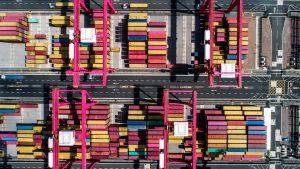
When this is completed , it can then be loaded onto the cargo ship via a crane. These containers are stacked up and secured to the boat where they can then make their journey overseas. During this journey, the vessel typically enters many ports on its route, to refuel, deliver containers, and collect additional containers. On some short sea feeder routes there may only be one destination.
Depending on which port the final destination is, depends on how many vessels the container boards. For the UK, some ports such as Felixstowe, Southampton, London Gateway and Liverpool have direct routes with the far east so don’t need to be unloaded and then reloaded onto a second feeder vessel. Smaller ports like Belfast and Grangemouth rely on feeder vessels as they cannot accommodate the larger vessels.
When it arrives, it must then be unloaded via a crane, onto a container yard or directly onto a truck. The imports custom process begins before the boat even arrives, to ensure a seamless journey. Once it leaves the vessel it must be transited by a haulier to its final destination. For cargo beginning in the Far East- China, Vietnam etc. The journey is between 30-45 days.
How a Freight Forwarder Helps
Freight forwarders, such as Trinity Logistics, act as the intermediaries between the supplier, the shipping company and the customer. We can help throughout the whole process, managing the whole supply chain to ensure a safe and cost-effective journey.
First, we work with the supplier, gathering information about the stock- the product itself, the number of items, size and weight, and can aid in securing collection and arrival to the port. Some companies may not own their own containers so freight forwarders also help secure containers and the container space aboard a vessel. Using the gathered information, they complete all paperwork necessary for customs in both the import and export process.
From there, the forwarder tracks the container and monitors it closely ensuring there are no issues.
When it arrives, the forwarder ensures the customs is completed and can support acquiring a haulier to complete the journey or find appropriate warehousing.
Why use a freight forwarder? Freight forwarders have greater experience and connections to ensure smooth sailing. With years of knowledge in the industry, they guarantee no mistakes are made during the whole process.
With all the experience, over time strong connections are made; with shipping companies, hauliers and the ports. With these relations comes better deals on ocean freight rates, trust and reliability with hauliers to safely move the goods and have flexibility in schedules.
Things to Consider:
When moving goods as ocean freight, there are several factors to consider; costs, time, and potential damages.
Time
For time management and organisation there are several factors that could largely impact the time in which your goods arrive:
- Weather disruptions and port congestion– may halt a vessel berthing, leaving port and supporting crane usage.
- Geopolitics– ongoing conflicts and trade embargoes may result in vessels being diverted, such as around the Cape of Good Hope instead of the Suez Canal.
- Haulage– In some case, vessels may not have direct routes with nearby ports so the time for goods to potentially cross the country via road or rail will impact timings.
- Additional port and customs Disruptions– Port cranes and vehicles can and do break down occasionally. When this happens, the crane may leave a container stuck underneath it. In some cases, customs enforcement may require additional inspection of containers. These can halt the journey for potentially up to a week.
- National Holidays– In each country, there are days or weeks where operations essentially shut down,
- Peak Season– Typically between June and November, demand for shipping increases rampantly. As a result securing space aboard a vessel becomes highly competitive, failure to secure space will create delays.
- Blank Sailings– There are occasions when ships will blank sail to maintain a schedule, containers booked will be rolled onto the next available vessel which can cause a delay of a week to a month.
Costs
Depending on which Incoterm has been negotiated there may be different charges paid directly. However, directly or indirectly some charges remain consistent for each job- Freight rates, port fees, customs clearance, but a single mistake could create new costs.
- Demurrage fees– Demurrage fees occur when a container stays within a port for longer than the free time negotiated.
- Detention fees– Detention fees occur when a rented container is held outside of the port or terminal longer than the time agreed.
- Peak Season Surcharge – When demand is high, freight rates increase dramatically.
Potential Damages
Damages can occur at any stage of the journey. Insurance is important for especially fragile goods. Damages are sometimes unavoidable, such as when containers are knocked when being lifted or due to being knocked by other containers. However, damage can also occur due to negligence and bad loading. To reduce the risk of damages:
- Ensure pallets aren’t stacked too high- reduce the risk of tipping.
- Ensure fragile cargo is secured correctly onto pallets.
- For fragile cargo ensure there is enough padding to cushion any potential knocks.
Roll-on/ Roll-Off
Roll-On/ Roll-Off involves transiting trucks with cargo overseas instead of just the container itself. This can be done long haul or over a short sea route. The process is very similar to standard ocean freight, the main difference being the container is driven on board the ship instead of being lifted on. It’s ideal for smaller ports that cannot store as many containers long term. The process is quicker than standard shipping due to easier loading, faster customs, and a quicker turnaround.